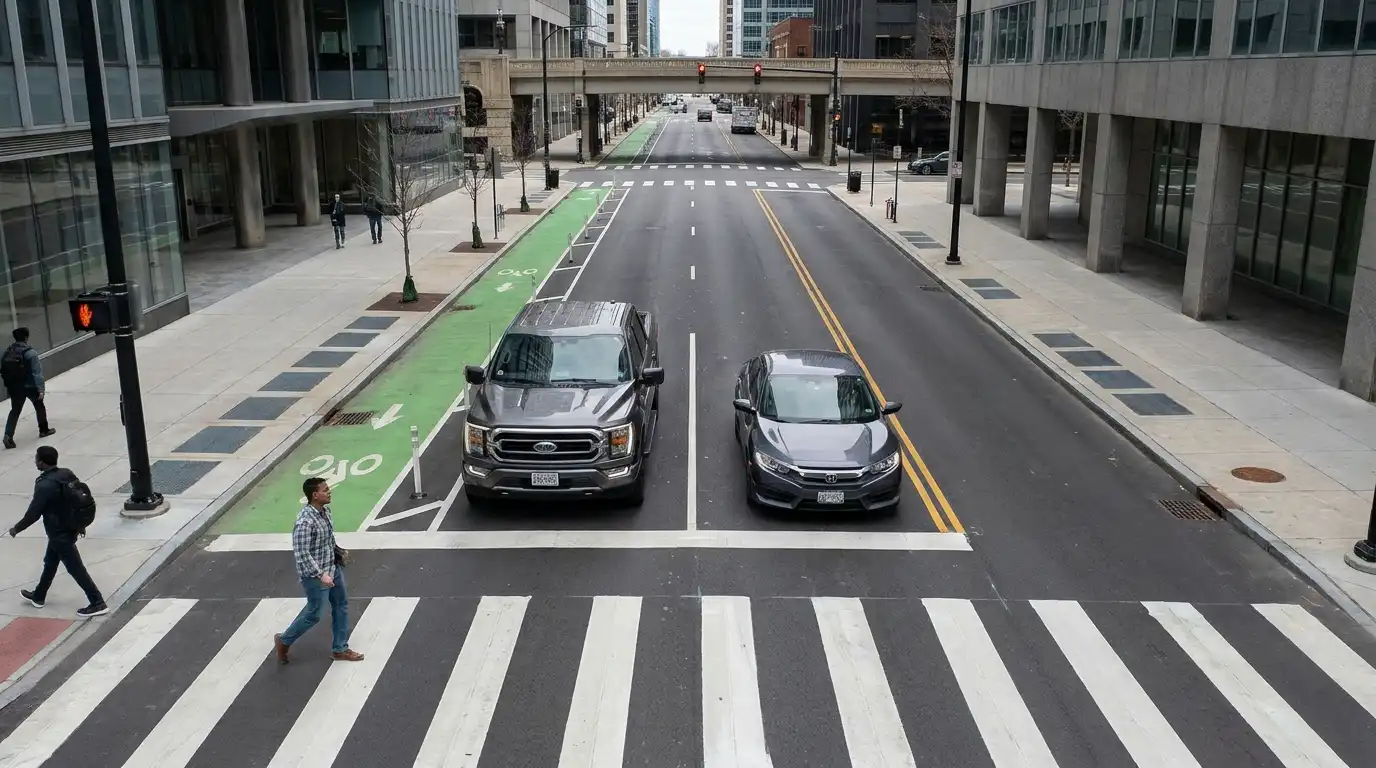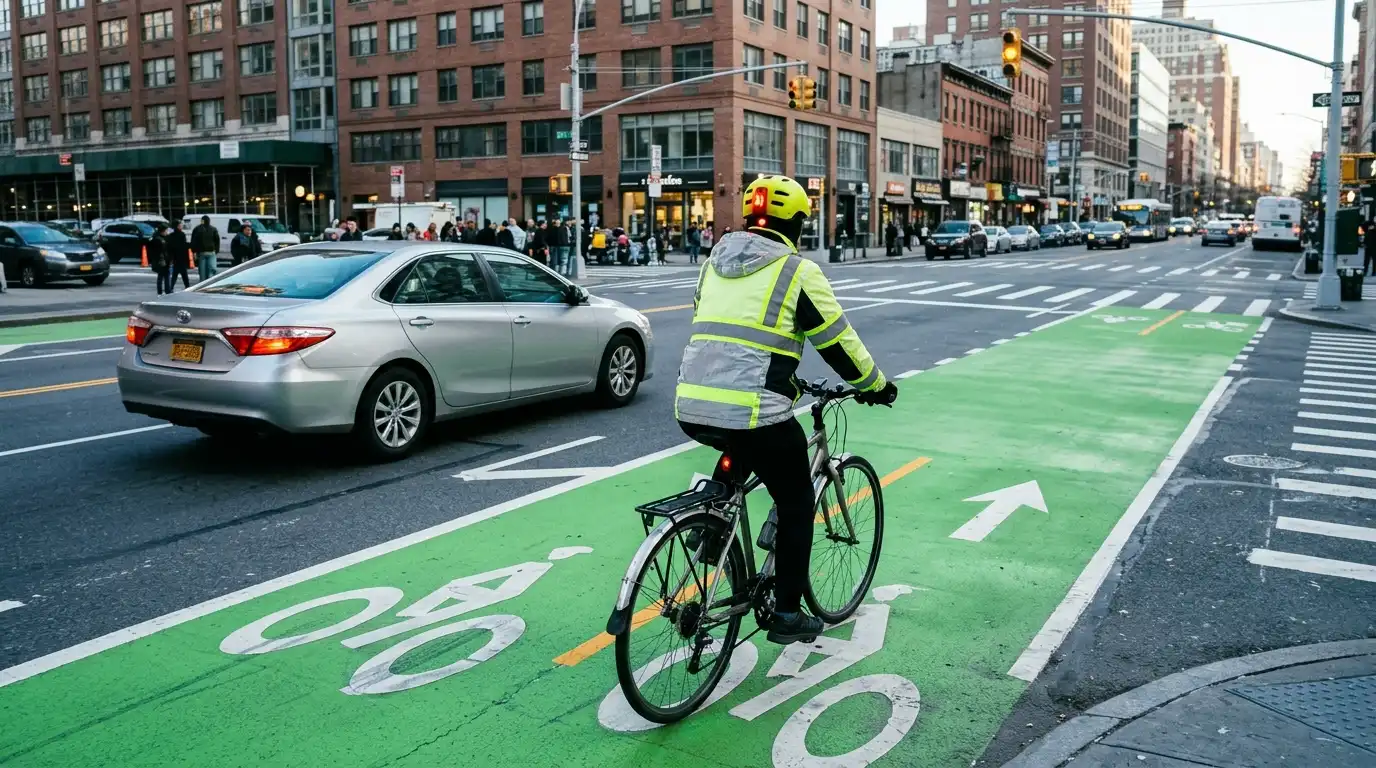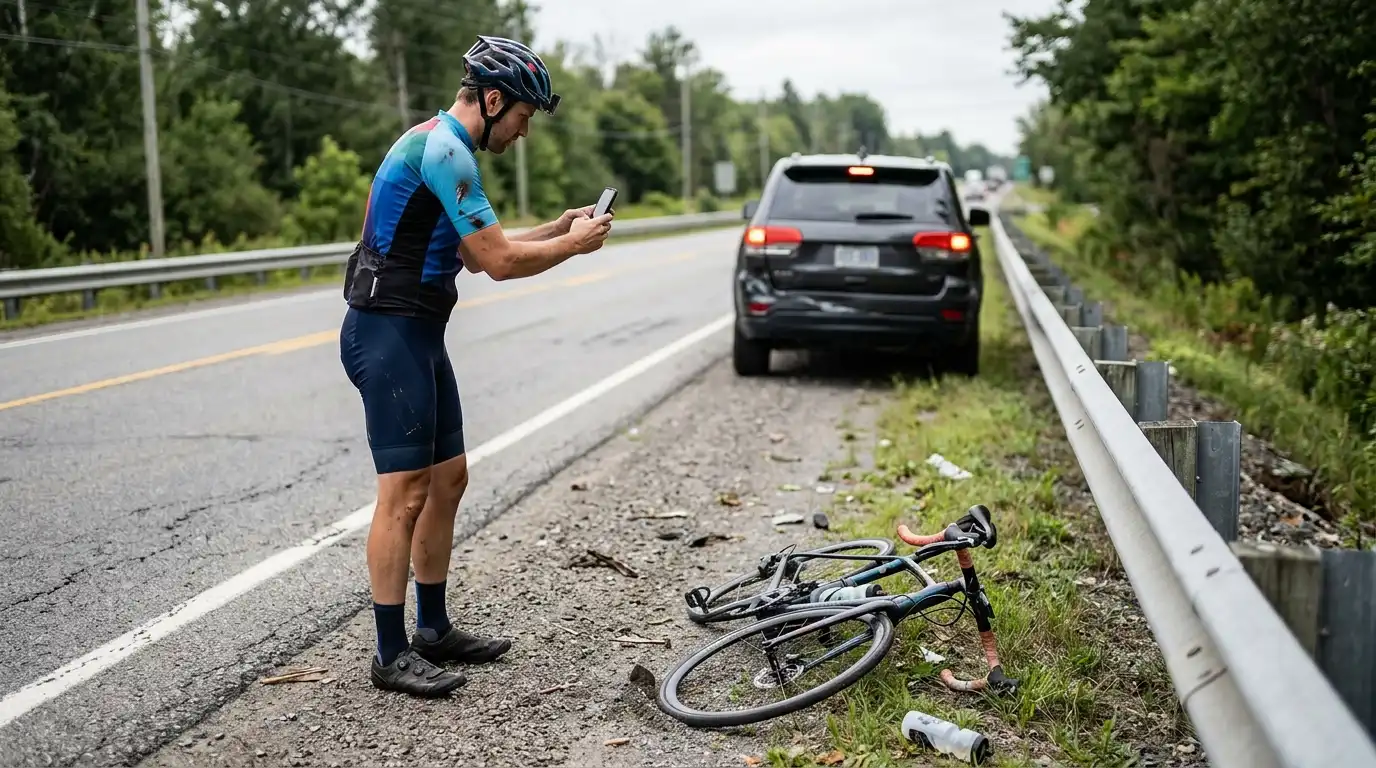
Over the past decade, fatal bicycle crashes in the United States have climbed steadily—even in cities that have invested heavily in painted bike lanes and public safety campaigns. When safety researchers dig into federal crash records, one structural shift stands out above almost every other variable: the dramatic change in the size, weight, and front-end geometry of the vehicles sharing the road. Understanding the link between SUVs, pickup trucks, and cyclist fatalities reveals why modern collisions have become significantly harder to survive.
While driver distraction and speeding remain major contributors to roadway deaths, crash physics dictates that the exact same collision speed produces vastly different medical outcomes depending on whether a cyclist is struck by a compact sedan or a full-size light truck.
The Shift in the U.S. Vehicle Fleet
American roadways look fundamentally different than they did twenty years ago. According to data from the U.S. Environmental Protection Agency and federal transportation registries, light trucks—a regulatory category that includes SUVs, pickup trucks, and vans—now account for roughly 80% of new passenger vehicle sales in the United States, up from roughly 50% in the early 2010s.
Federal fatality records mirror that fleet transformation. Annual bicyclist deaths recorded by the National Highway Traffic Safety Administration bicycle safety data have surged past 1,100 fatalities per year—the highest totals documented in more than four decades. Deeper analysis of single-vehicle crashes involving vulnerable road users shows that collisions involving SUVs and pickup trucks account for a disproportionate share of severe injuries and deaths compared to passenger cars.
Hood Height and Impact Geometry: Sedan vs. Light Truck
The single most critical factor separating a survivable bicycle crash from a fatal one is where the vehicle makes primary contact with the rider’s body. Engineering studies conducted by the Insurance Institute for Highway Safety pedestrian and cyclist research demonstrate how front-end height alters the trajectory of a human body during a collision:
- Traditional Sedans (Low Hood Profile): When a sedan with a hood height of 28 to 32 inches strikes a cyclist, the bumper makes initial contact below the rider’s center of gravity—typically at the knees, thighs, or bicycle frame. This sweeps the cyclist upward onto the sloped hood and windshield, dissipating energy across a broader surface area and reducing direct blunt-force trauma to vital organs.
- SUVs and Pickup Trucks (Tall, Blunt Front Grilles): Modern full-size pickup trucks and large SUVs frequently feature vertical front grilles standing 45 to 55 inches or higher off the pavement. At that height, the blunt front edge strikes an adult cyclist directly in the pelvis, abdomen, chest, or head—right at or above their center of gravity.
Instead of rolling onto the hood, a cyclist struck by a tall, flat front end is projected forward onto the pavement, dramatically increasing the risk of being run over by the vehicle’s front wheels. Medical trauma registries consistently show that high-front-end impacts produce substantially higher rates of traumatic brain injuries (TBIs), cervical spine fractures, and fatal internal thoracic trauma.
Vehicle Mass, Kinetic Energy, and Stopping Distance
Beyond front-end height, sheer vehicle weight governs the severity of an impact. Under basic Newtonian physics, kinetic energy equals half of an object’s mass multiplied by the square of its velocity (KE = ½mv²). While a standard midsize sedan weighs roughly 3,300 to 3,600 pounds, a full-size SUV or crew-cab pickup truck routinely weighs between 5,000 and 6,500 pounds—and heavy-duty or electric variants can exceed 7,000 pounds.
That 1,500- to 3,000-pound mass penalty affects crash outcomes in two measurable ways:
- Higher Energy Transfer: At an identical urban speed of 30 mph, a 5,800-pound pickup truck carries roughly 65% more kinetic energy than a 3,500-pound sedan. When that energy transfers into an unprotected cyclist weighing under 200 pounds with their bicycle, the resulting impact forces easily exceed human tolerance thresholds.
- Extended Braking Distances: Heavier vehicles require greater braking force and longer distances to come to a complete stop, particularly on wet pavement. Even a 10- to 15-foot difference in stopping distance at 25 mph can mean the difference between a near-miss at an intersection and a high-force collision.
Side-by-Side Comparison: How Vehicle Type Alters Cyclist Crash Dynamics
| Crash Variable | Standard Passenger Sedan | Full-Size SUV / Pickup Truck |
|---|---|---|
| Typical Curb Weight | 3,200 – 3,700 lbs | 5,000 – 6,800+ lbs |
| Average Hood Height | 28 – 33 inches | 44 – 55+ inches |
| Primary Impact Zone | Lower extremities (knees, thighs, bike frame) | Torso, chest, shoulders, and head |
| Post-Impact Trajectory | Rider lifted onto sloped hood/windshield | Rider knocked forward into vehicle path |
| Forward Blind Zone | Minimal; clear view close to front bumper | Extensive; up to 10–15 feet ahead of grille |
Front Blind Zones and Low-Speed Turning Crashes
High-speed arterial collisions are not the only danger posed by larger vehicles. Crash investigators and safety advocacy groups—including the League of American Bicyclists roadway safety reports—have documented a troubling rise in low-speed intersection fatalities involving right-turning and left-turning trucks and SUVs.
Because tall, boxy hoods block the driver’s direct line of sight immediately in front of the bumper, many full-size trucks create a forward blind zone extending 10 to 15 feet ahead of the vehicle. Combined with thicker front A-pillars designed to support heavier roofs during rollovers, drivers executing turns at urban intersections frequently fail to see a cyclist riding parallel in a bike lane or waiting just ahead of the crosswalk line.
This geometry directly explains why “right-hook” collisions—where a driver turns right across a cyclist’s path—have become far deadlier when a pickup truck or SUV is involved. Even at 10 to 15 mph, a vehicle turning over a cyclist in its forward blind spot carries enough mass to cause fatal crushing injuries before the driver ever realizes a collision occurred.
What the Data Means for Cyclists and Street Design
 While individual riders cannot control the size of the vehicles around them, understanding these statistical realities helps inform both defensive riding habits and local infrastructure advocacy:
- Avoid Lingering in Forward and Right-Side Blind Zones: At red lights, stop either clearly behind a large truck’s rear bumper or advance fully into a designated green bike box ahead of the stop bar where the driver can see you through the windshield. Never pull alongside the front passenger door of a tall truck preparing to turn.
- Prioritize High-Contrast Daytime Visibility: Because thicker A-pillars and tinted windows reduce peripheral detection inside larger cabins, running a bright daytime flashing front headlight and rear taillight helps break up visual clutter in a driver’s mirrors.
- Support Protected Intersections and Daylighting: On the policy side, crash data consistently shows that paint alone cannot compensate for vehicle size disparity. Municipalities that implement intersection “daylighting” (removing parked cars within 20 feet of crosswalks), protected corner islands, and leading pedestrian/cyclist signal intervals dramatically reduce blind-spot turning collisions.
Crash statistics make one reality unmistakable: as passenger vehicles have grown heavier and taller, the margin for error on shared streets has narrowed. Recognizing how vehicle mass, hood height, and blind zones interact gives cyclists sharper situational awareness—and underscores why physical separation and sightline engineering remain essential to saving lives.